
Charcuterie and Cheese Boards – Easy, Stunning, Party-Ready

Ever stared at a gorgeous board on Pinterest and thought, “There’s no way I can pull that off”? I’ve been there, friend.
Then you start wondering what goes where, which cheese is right, and whether your board will look like a sad pile of crackers. Stressful, right?
Good news: charcuterie and cheese boards are way easier than they look. Once you know the simple formula, you can build a showstopper in about 20 minutes.
This guide walks you through how to make a Charcuterie and Cheese Boards, from the shopping list to the final fig drizzle. You’ll need about 10 ingredients, zero cooking, and no fancy skills.
↓ Jump straight to the recipe using the button above, or keep reading for all my tips!
Why You’ll Love These Charcuterie and Cheese Boards
✔️ Ready in 20 minutes — No oven, no stove, no stress. Just slice, arrange, and snack.
✔️ Beginner-friendly — This easy charcuterie board works even if you’ve never built one before.
✔️ Perfect for any crowd — A charcuterie board for a party feeds a dozen people without you hovering over a pan.
✔️ Totally customizable — Swap cheeses, meats, and fruit to match your budget and your guests.
✔️ Make-ahead friendly — Prep the pieces earlier in the day and assemble when guests knock on the door.
✔️ Looks fancy, costs less — A homemade charcuterie board beats a store-bought platter in both flavor and price.
Ingredients You’ll Need
Here’s the charcuterie board shopping list I use for a board that serves 8 to 10 people. Think of it as your charcuterie board ingredients cheat sheet.
Main Ingredients
| Ingredient | Amount | Why It’s Used | Substitute |
|---|---|---|---|
| Sharp cheddar | 6 oz | Bold, familiar flavor everyone likes | Aged gouda |
| Brie | 6 oz | Creamy, mild, spreadable | Camembert |
| Manchego or gruyère | 6 oz | Nutty, firm slices for stacking | Aged Swiss |
| Soft goat cheese | 4 oz | Tangy contrast | Cream cheese log |
| Salami | 6 oz | Salty, chewy, rich | Summer sausage |
| Prosciutto | 4 oz | Silky, delicate | Serrano ham |
| Assorted crackers | 1 box | Crunchy base for every bite | Sliced baguette |
| Grapes | 1 cup | Juicy, sweet freshness | Cherries |
| Strawberries or figs | 1 cup | Color and natural sweetness | Apple slices |
| Almonds | 1/2 cup | Crunch and healthy fat | Pistachios |
| Honey or fig jam | 1/3 cup | Sweet-salty magic | Pepper jelly |
| Olives | 1/2 cup | Briny bite that cuts richness | Cornichons |
Blogger Note: Spend your money on the cheese. A great brie or aged cheddar carries the whole board, while the crackers and fruit can be budget-friendly. Good cheese tastes better at room temperature, so pull it out early.
Optional Add-ins & Variations
- Dark chocolate squares: Add a bittersweet finish that pairs with cheddar and nuts.
- Roasted red peppers: Bring smoky sweetness and a pop of color.
- Marcona almonds: Give a buttery, upgraded crunch.
- Pickled veggies: Add tang that refreshes your palate between rich bites.
- Dried apricots: Offer chewy sweetness that loves salty meats.
Ingredient Substitutions
| Need | Swap |
|---|---|
| Dairy-free | Cashew-based cheeses and vegan spreads |
| Gluten-free | Rice crackers, seed crackers, or veggie slices |
| Egg-free | Naturally egg-free, so no changes needed |
| Sugar alternatives | Skip the jam and use fresh fruit or a drizzle of maple syrup |
Equipment You’ll Need
- Large wooden board, marble slab, or serving platter
- Cheese knives
- Cheese spreader
- Small bowls or ramekins
- Sharp chef’s knife
- Cutting board
- Small serving spoons
- Toothpicks or cocktail picks
- Small tongs
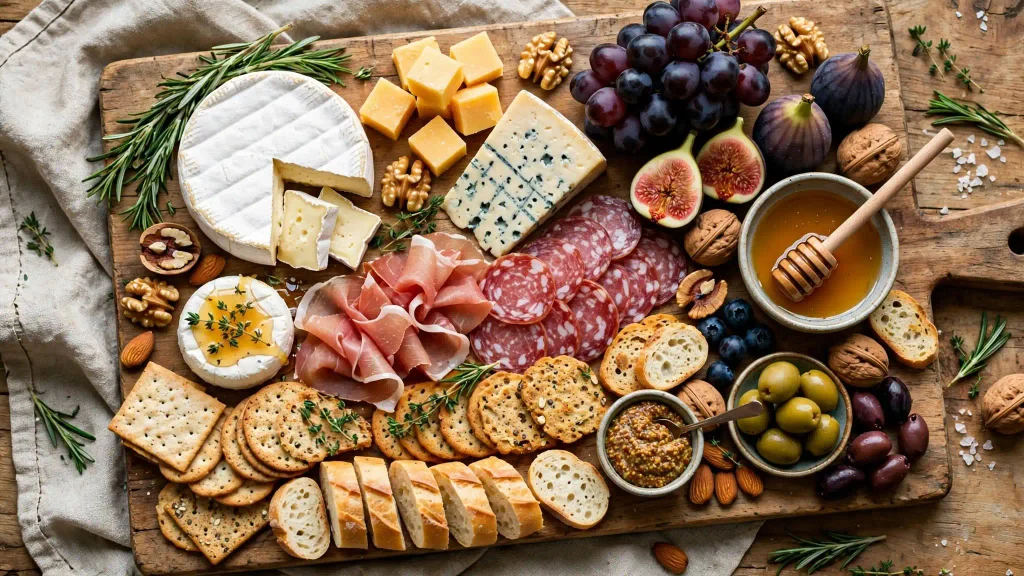
How to Make Charcuterie and Cheese Boards – Step by Step
Here’s how to make a cheese board and a meat board in one beautiful platter. Grab a large wooden board, marble slab, or even a baking sheet.
Step 1 – Set Out the Cheese
Take your cheese out of the fridge 30 to 45 minutes before serving. Place the largest pieces on the board first, spacing them apart like anchors.
👁️ Visual Cue: Cheeses sit in a loose triangle, with room between each one.
💡 Pro Tip: Give each cheese its own knife so flavors don’t mingle.
Step 2 – Add Small Bowls
Place little bowls of olives, jam, and honey on the board. They act as borders and keep wet items from soaking your crackers.
👁️ Visual Cue: Bowls are scattered evenly, not lined up like soldiers.
⚠️ Watch Out: Never put wet olives directly on the board. Brine will make crackers soggy fast.
Step 3 – Slice and Fold the Meats
This is the fun part of how to arrange a charcuterie board. Fold salami slices into quarters or make little roses. Drape prosciutto in loose ribbons.
👁️ Visual Cue: Meats look like soft, overlapping waves around the cheese.
💡 Pro Tip: Thin slices fold best when the meat is cold, so slice before the board warms up.
Step 4 – Fan Out the Crackers
Tuck crackers into curves along the edges. Keep them near the cheese so guests can grab one, top it, and go.
👁️ Visual Cue: Crackers stack in neat fans, not scattered piles.
💡 Pro Tip: Mix shapes and flavors so your crackers and cheese board has texture variety.
Step 5 – Fill the Gaps with Fruit
Add grapes, berries, and sliced figs to fill every empty spot. This turns a good charcuterie board with fruit into a gorgeous one.
👁️ Visual Cue: No bare wood is showing, and colors alternate (red, green, purple).
⚠️ Watch Out: Dry the fruit well. Water spots make crackers limp.
Step 6 – Finish with Nuts and Garnish
Sprinkle almonds into the last gaps. Add fresh rosemary or thyme sprigs for a fragrant, bakery-shop finish.
👁️ Visual Cue: The board looks abundant, with small touches of green throughout.
💡 Pro Tip: Drizzle honey over the brie right before serving so it stays glossy.
Expert Tips for the Best Results
🔑 TIP #1: Use the “3-3-3” Rule Pick three cheeses, three meats, and three accompaniments. It keeps shopping simple and the board balanced. Too many choices overwhelm both you and your guests.
🔑 TIP #2: Vary Cheese Textures Choose one soft, one semi-firm, and one hard cheese. Different textures keep palates interested, and they melt at different rates as the board sits out.
🔑 TIP #3: Serve Cheese at Room Temperature Cold temperatures mute flavor because fat molecules stay tightly set. Thirty minutes on the counter lets aromas bloom and flavor open up.
🔑 TIP #4: Build Big to Small Place large items first, then medium, then tiny fillers. This is how pros keep a meat and cheese board from looking cluttered.
🔑 TIP #5: Balance Salty, Sweet, and Tangy Salty meats crave sweet fruit, and rich cheese loves a briny pickle. Contrast resets your taste buds, so every bite tastes fresh.
Charcuterie and Cheese Boards Variations to Try
Simple Charcuterie Board
Short on time or budget? Use one cheese, one meat, crackers, and grapes. A simple charcuterie board still feels special, especially for a quiet night at home.
Charcuterie Board for a Party
Double the quantities and add a second board or a tiered stand. For a charcuterie board for a party, add finger-friendly items like cubed cheese and skewered olives.
Charcuterie Board Meat and Cheese Ideas
Try pairing spicy soppressata with creamy havarti, or prosciutto with sharp provolone. These charcuterie board meat and cheese ideas bring new flavor combos to every gathering.
Cheese Board Appetizer
Skip the meat, and build a cheese board appetizer with three cheeses, honey, nuts, and sliced pears. It’s lighter and perfect before a big dinner.
Holiday Charcuterie Board Ideas
For charcuterie board ideas that wow, add cranberries and rosemary for winter, or berries and edible flowers for spring.
How to Store, Refrigerate & Freeze
Room Temperature Storage
Leave your board out for up to 2 hours. After that, move perishable items back to the fridge, since dairy and cured meats shouldn’t sit longer. Keep crackers in an airtight container so they stay crisp.
Refrigerator Storage
Wrap cheeses in wax paper, then place them in a zip-top bag, and they’ll last 5 to 7 days. Store meats in a sealed glass container for 3 to 5 days. Keep fruit in a separate container to prevent sogginess.
Freezer Instructions & How to Reheat
Hard cheeses like cheddar freeze well for up to 2 months in airtight freezer bags, though texture turns crumbly. Thaw overnight in the fridge. Soft cheeses and fresh fruit don’t freeze well, so skip them.
What to Serve With Charcuterie and Cheese Boards
🧈 Simple Spreads & Toppings
- Fig jam for brie and goat cheese
- Whole-grain mustard for salami
- Honey for blue cheese and aged cheddar
- Pepper jelly over cream cheese
☕ Drink Pairings
- Sparkling wine or prosecco for creamy cheeses
- Light red wine for cured meats
- Sparkling water with citrus for a non-alcoholic option
- Iced tea with lemon for daytime gatherings
🍨 Dessert Style Serving
- Dark chocolate squares with berries
- Mini shortbread cookies beside soft cheese
- Sliced pears with candied pecans
Hosting a spooky get-together? Set out my Halloween trail mix recipe beside the board for an easy grab-and-go snack.
Need something sweet to finish the night? My Halloween cake pops recipe is a fun, party-friendly dessert.
Serving a bigger meal? My fried cabbage with bacon makes a hearty side after the appetizer board.
Want something warm on a chilly evening? Try my cabbage soup with crackers and a few slices of cheese on the side.
Craving a cozy dinner after the snacking? Check out my stuffed cabbage rolls for a comforting main.
What to Put on a Charcuterie Board: Best Cheese and Meats
Wondering what to put on a charcuterie board? Start with a mix of cheese, meat, something crunchy, something sweet, and something briny.
The best cheese for charcuterie board setups usually includes brie, aged cheddar, gouda, and goat cheese. They cover creamy, sharp, and tangy in one go.
For the best meats for charcuterie board options, I love salami, prosciutto, soppressata, and capicola. They look gorgeous folded and taste even better with a bite of sweet fruit.
If you’re a total newbie, a charcuterie board for beginners is just a shorter list: two cheeses, two meats, crackers, and fruit.
Frequently Asked Questions
How Do You Make A Charcuterie Board For Beginners?
Start with two cheeses, two meats, crackers, and fruit. Place cheese first, add meats, then fill the gaps with fruit and nuts.
What Is The Difference Between A Charcuterie Board And A Cheese Board?
A charcuterie board focuses on cured meats with cheese and extras. A cheese board centers on cheese, with fewer or no meats.
What Are The Typical Ingredients For A Charcuterie Board?
Expect cheeses, cured meats, crackers, fresh fruit, nuts, olives, and a sweet spread like honey or jam.
How To Make Charcuterie At Home?
Gather your favorite cheeses, meats, crackers, and fruit. Arrange them on a large board, add small bowls for spreads, and serve at room temperature.
Nutrition Information
| Calories | Fat | Carbohydrates | Protein | Sugar | Fiber | Sodium |
|---|---|---|---|---|---|---|
| 320 | 24 g | 11 g | 14 g | 6 g | 1 g | 720 mg |
Cheese and cured meats drive most of the calories. To lighten things up, swap half the cheese for extra fruit and veggies. Exact values vary by the ingredients you choose.

Charcuterie and Cheese Boards
Ingredients
Equipment
Method
- Remove cheese from the fridge 30 minutes before serving.
- Place the cheeses on a large board, spaced apart.
- Add small bowls of olives, honey, and jam.
- Fold salami and drape prosciutto around the cheese.
- Fan the crackers along the edges.
- Fill gaps with grapes and berries.
- Sprinkle almonds into the remaining spaces.
- Garnish with herbs and serve right away.
Video
Notes
- Serve at room temperature for the best flavor.
- Prep sliced items up to 4 hours ahead and keep them covered.
- Add crackers just before serving to keep them crisp.
- Use separate knives for each cheese.
